Why consider a VAWT‑based floating array now?
High capacity per platform:
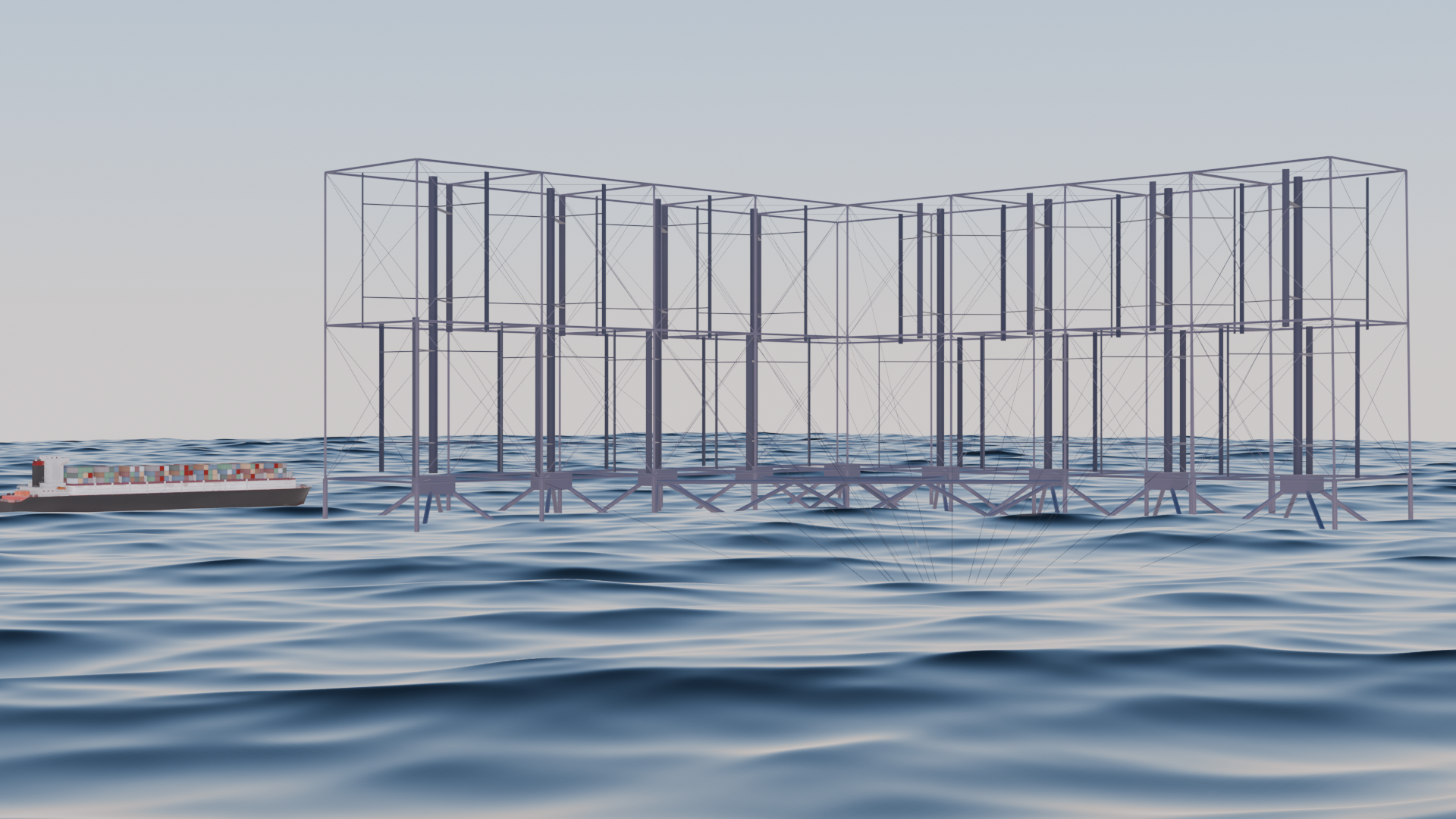
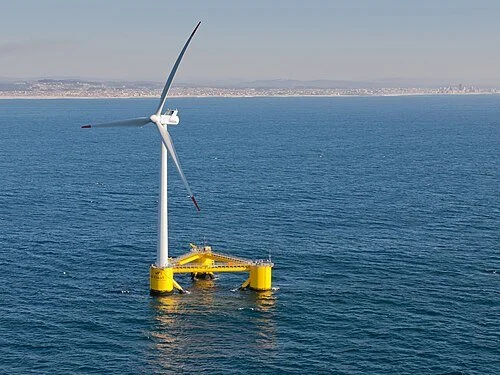
The proposed offshore configuration carries 16 × 5 MW turbines = 80 MW on a single floating structure — roughly four times the capacity of typical single‑turbine floating units today. This reduces the cost of the connection to land.Efficient structural use of material:
With diagonals held in tension and primary members kept in compression only, the external frame can be lighter than a comparable HAWT tower for the same power rating.Stacked turbines on a common shaft:
On land, the cube modules can be stacked 3–4 high on a single shaft, accessing higher winds and increasing total power at the same rotational speed and with a shared drivetrain.Prestressed Truss Beams (PTBs):
A novel beam configuration that allows compression loads up to about 18× Euler’s buckling limit with only about 33% more weight, enabling very long, slender, but stable structural members.Array‑level performance potential:
Small‑scale tests of similar V‑shaped arrays show that when spacing and angle are selected correctly (with angles not less than 90° and sufficient spacing at the bottom of the V), the total array power can exceed the sum of isolated turbines.Weight Supported at ground/water level:
The Outside frame only supports the lateral forces such as thrust and acceleration, not the weight of the rotors. The entire weight of stacked turbines is supported by a bearing at the ground or near water levels.
Previous Advantages:
Yaw and pitch systems are not required. VAWT’s can accept wind from any direction. Two bladed turbines can rotate the blades out of the wind when severe weather occurs.
Mechanical components are at ground or water level, which lowers the centre of gravity and gives easy access for maintenance.
Minor foundations at the corners are required on land instead of a robust foundation supporting overturning moment forces.
This is not presented as a finished, certified product, but as a strong starting point for further engineering development by companies that already know how to take designs through to commercial deployment.